

Epoxy Flooring Johannesburg: What's Actually Going On With Garage Floors
More Johannesburg homeowners are choosing epoxy flooring than ever garage epoxy flooring, and there's a reason your neighbour's garage suddenly looks like a showroom. Plain concrete cracks. It stains easily. It can start producing concrete dust within a year or two. Epoxy changes that, and Joburg's weather makes the investment worthwhile.
The city sits at over 1700 metres. Nights get surprisingly chilly, days heat up quickly, and that temperature swing puts stress on concrete. Add the clay-heavy soil found beneath many suburbs, and slabs can experience movement that isn't immediately obvious. A sealed floor handles everyday conditions better than untreated concrete.
Why Floor Preparation Is So Important
Nobody looks forward to concrete grinding. It's loud, dusty, and it can take several hours before anyone even touches the epoxy. But skip that preparation and the entire coating can fail within months. Moisture trapped under old concrete can push epoxy upward like a blister. Contractors who rush preparation aren't doing anyone any favours.
A proper installer tests the slab for moisture before coating. If the reading is above an acceptable level, they'll improve ventilation, depending on the situation. Skip that test, and the floor could develop adhesion problems within a relatively short period. It's a problem that proper preparation can often prevent.
Curing Time Is Not a Suggestion
Epoxy needs time. Full stop. Walking on it too soon can leave permanent footprints in the finish. Driving a car onto it before the chemical reaction is complete can leave tyre marks that never disappear. Nobody wants their car's tyre pattern permanently baked into the coating.
Most residential jobs need roughly a full day before foot traffic, and around a week before vehicles can safely return. That week may feel painfully long when your car is parked outside getting exposed to the elements, but rushing the process could create a repair bill that makes the wait seem trivial.
Flakes or Solid Colour: Which Epoxy Finish Wins?
Plain grey or a single-colour finish looks neat and modern, almost corporate. It's fine if you're after a straightforward appearance. Flake systems, where decorative flakes are broadcast into the coating, do a better job of hiding small imperfections. Anyone with kids or dogs tracking mud through the garage should seriously consider flakes.
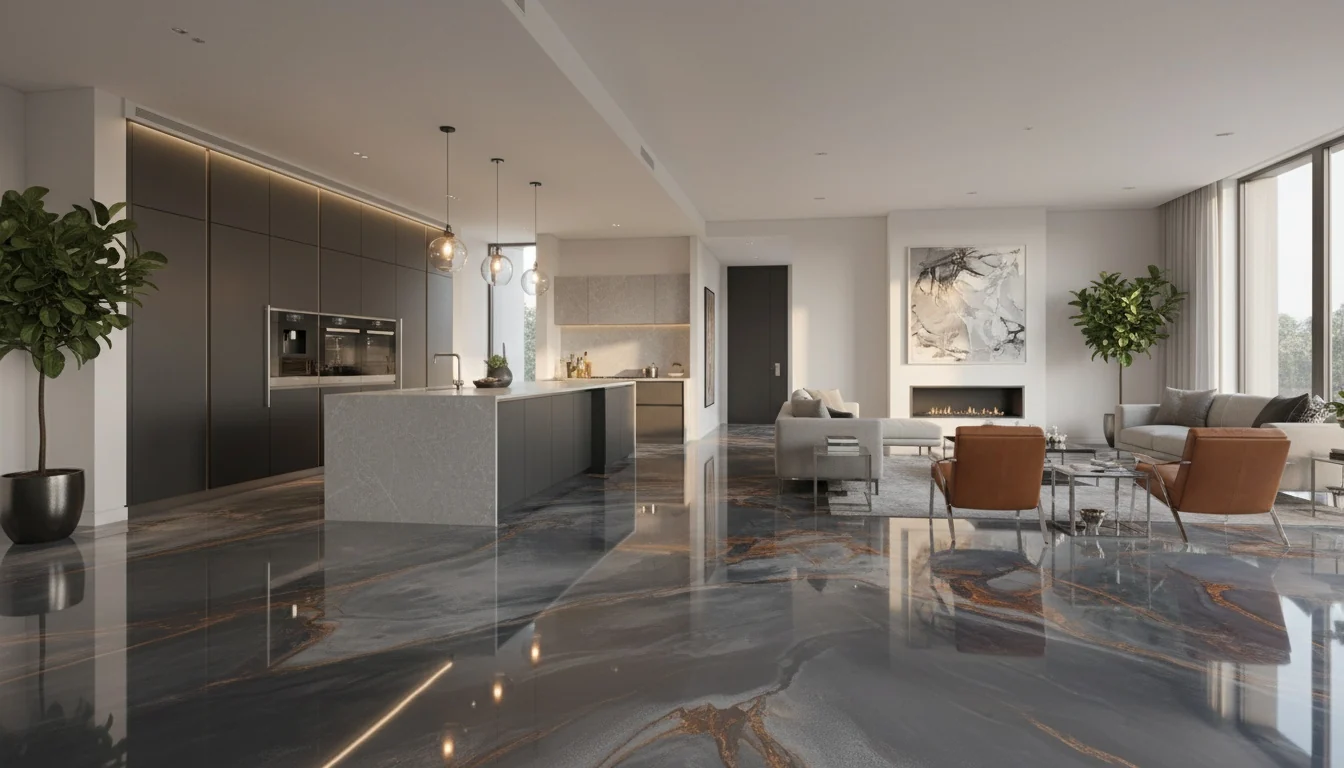
Metallic epoxy is the more dramatic option nobody thought they'd want but often becomes appealing once they see a sample. The flowing colour patterns create an appearance similar to oil floating on water. It costs more. It also can make a garage look surprisingly luxurious, which is not something you hear every day about a garage.
What It Actually Costs
Prices around Johannesburg vary considerably depending on square metreage, the state of the concrete, and the finish selected. A basic two-coat system on a small garage might cost a few thousand rand, while metallic finishes or large commercial floors may cost considerably more. It's worth getting multiple quotations. Any contractor who quotes without seeing the existing floor is probably working from assumptions, and epoxy pricing based on guesses can become expensive very quickly.
Warehouses and industrial spaces need thicker and more durable coatings, designed to survive forklifts, constant foot traffic, and demanding working conditions. A garage floor and a factory floor shouldn't be treated as identical jobs, even though both are often grouped under the broad term "epoxy floor coating."
Ask about the installation warranty before signing anything. Ask whether defects are covered if the coating fails early. A contractor who is comfortable discussing warranties and potential problems has probably completed hundreds of similar jobs, and that's exactly the kind of installer you want working on your floor.